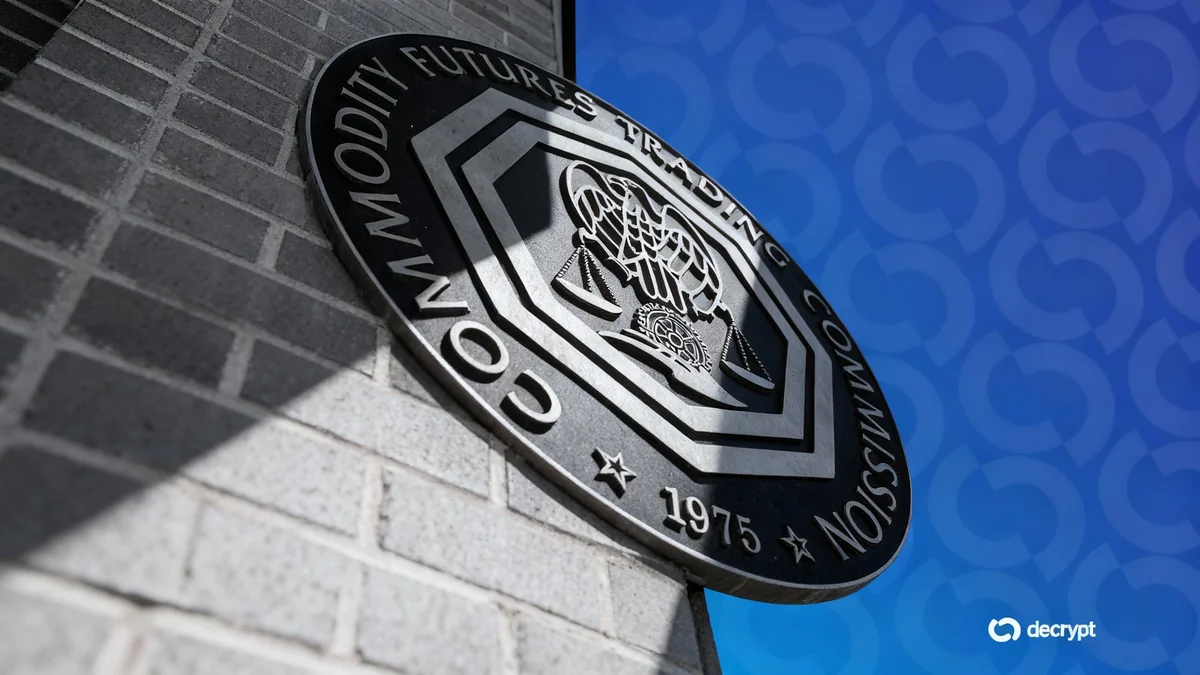

A bipartisan proposal from the Senate Agriculture Committee aims to grant the Commodity Futures Trading Commission (CFTC) direct authority over spot trading for digital assets like Bitcoin. The move comes as the broader cryptocurrency market experiences significant price fluctuations, with Bitcoin recently trading below the key $100,000 level before recovering.
The proposed legislation, introduced by committee leaders, signals a growing effort in Washington to establish a clear regulatory framework for the rapidly expanding digital asset industry. This development is being closely watched by investors as it could fundamentally reshape how cryptocurrencies are traded and supervised in the United States.
Key Takeaways
- A new bipartisan Senate bill would give the CFTC authority to regulate crypto spot markets.
- The proposal aims to provide regulatory clarity for digital commodities like Bitcoin and Ethereum.
- The crypto market is showing increased volatility, with Bitcoin recently falling below $100,000.
- Major cryptocurrencies like Bitcoin and Ethereum have seen declines of over 2% in the last 24 hours.
New Regulatory Framework Takes Shape in Washington
Momentum is building on Capitol Hill to bring comprehensive regulation to the cryptocurrency spot market. Leaders of the Senate Agriculture Committee have put forward a discussion draft that would explicitly empower the Commodity Futures Trading Commission (CFTC) to oversee the trading of digital commodities.
This category includes major assets not classified as securities, most notably Bitcoin (BTC) and Ethereum (ETH). The bipartisan effort, led by Chairman John Boozman and Senator Cory Booker, seeks to create defined rules for a market that has largely operated in a regulatory gray area.
The proposal follows related legislation passed in the House, indicating a coordinated push to establish guardrails for the industry. If passed, this would represent one of the most significant steps toward integrating digital assets into the traditional financial regulatory structure in the U.S.
The Push for Clarity
For years, market participants have called for clearer rules, arguing that ambiguity stifles innovation and leaves consumers unprotected. This bill aims to address those concerns by designating the CFTC, which already oversees crypto derivatives markets, as the primary regulator for the spot commodity market.
The move could provide a more stable environment for institutional investors and everyday traders alike. However, it will also likely introduce new compliance requirements for exchanges and other platforms operating in the space.
Understanding the CFTC's Role
The Commodity Futures Trading Commission is an independent agency of the US government that regulates the U.S. derivatives markets, which includes futures, swaps, and certain kinds of options. Its authority over crypto has so far been limited to derivatives, but this new bill would expand its reach directly into the buying and selling of the underlying assets.
Market Reacts With Widespread Volatility
The push for regulation coincides with a period of notable turbulence across the cryptocurrency markets. Bitcoin, the industry's benchmark asset, recently saw its price dip below the psychologically important $100,000 mark for the first time since May, causing concern among traders.
While the price has since recovered to around $103,300, the market remains on edge. Over the past 24 hours, most major digital assets have posted losses. Bitcoin is down approximately 2.25%, while Ethereum has fallen by about 2.11% to trade near $3,470.
Market Snapshot: 24-Hour Performance
- Bitcoin (BTC): $103,372.00 (-2.25%)
- Ethereum (ETH): $3,469.55 (-2.11%)
- Solana (SOL): $159.11 (-4.48%)
- XRP: $2.43 (-4.68%)
Prices reflect recent trading data and are subject to change.
This price action suggests investors are weighing positive macroeconomic signals, such as progress toward a U.S. government reopening, against the uncertainties of the incoming regulatory landscape. The potential for stricter oversight could be tempering enthusiasm in the short term.
Altcoin Movers and Shakers
Beyond the market leaders, several alternative cryptocurrencies, or altcoins, are experiencing dramatic price swings. Zcash (ZEC) has seen a significant downturn, falling nearly 15% to approximately $497 after a recent parabolic run that took it as high as $750.
In contrast, Uniswap (UNI) has defied the broader market trend, surging an impressive 23.57% to trade at $8.65. These isolated movements highlight the diverse factors influencing individual assets, even as the overall market sentiment remains cautious.
Other assets showing significant declines include Starknet (STRK), down over 12%, and Arweave (AR), which has dropped nearly 9%.
Institutional Interest Remains a Key Factor
Despite the regulatory uncertainty and price volatility, signs of continued institutional interest in the crypto space persist. Recent reports indicate that Tether, the issuer of the world's largest stablecoin, has purchased an additional $100 million worth of Bitcoin for its reserves.
Furthermore, retail trading giant Robinhood is reportedly considering adding Bitcoin to its corporate balance sheet. Such moves by major financial players signal a long-term belief in the asset class, potentially providing a floor for prices during periods of market stress.
"The persistent interest from institutional players, even in the face of regulatory headwinds, suggests a maturation of the asset class. They are looking beyond short-term volatility toward the long-term potential of the technology."
The Fomo app, a new platform in the space, also recently announced a successful $17 million funding round led by the prominent venture capital firm Benchmark. This investment underscores that venture capital continues to flow into innovative projects within the digital asset ecosystem, betting on future growth regardless of current market conditions.
As regulators in Washington move closer to establishing a formal framework, the market is navigating a critical transition phase. The outcome of these legislative efforts will likely set the course for the industry's next chapter of growth and adoption.