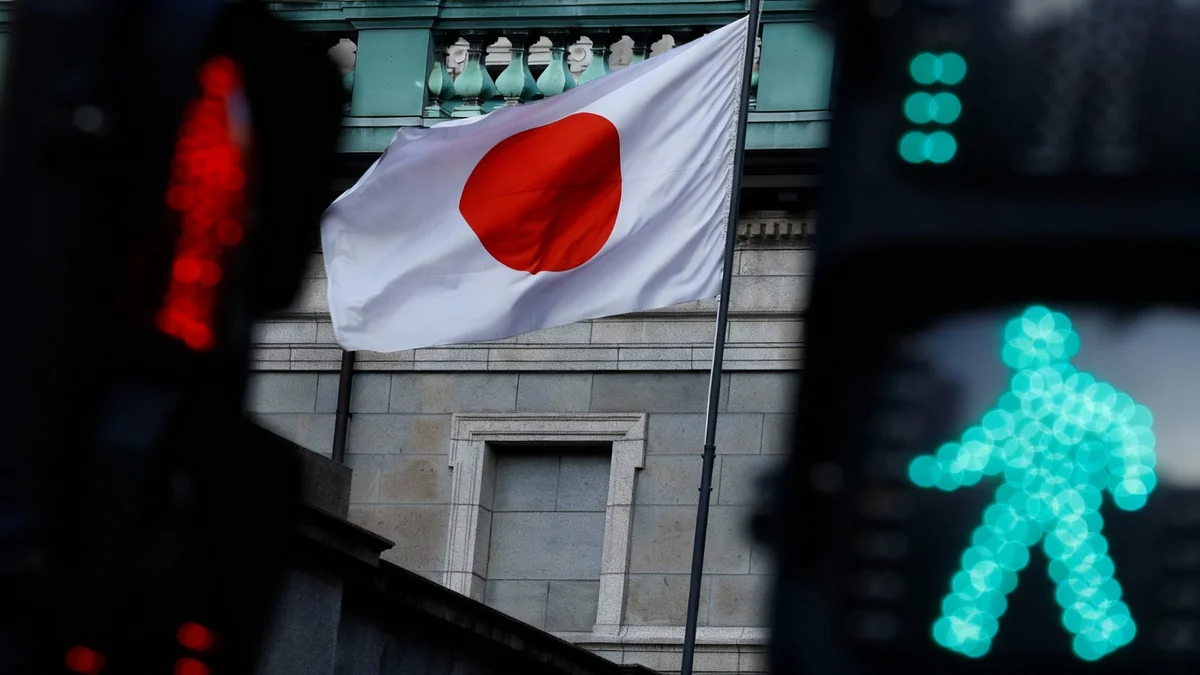

The Bank of Japan (BOJ) has given its strongest indication yet that another interest rate hike could be imminent, a move that would stand in stark contrast to the anticipated policy direction of the U.S. Federal Reserve. BOJ Governor Kazuo Ueda's recent comments have sent ripples through global currency and bond markets, providing a much-needed lift to the struggling Japanese yen.
Ueda stated that the central bank would weigh the advantages and disadvantages of raising interest rates at its upcoming policy meeting in two weeks. This announcement immediately impacted the yen, which has been hovering near 10-month lows against the U.S. dollar, prompting concerns over potential government intervention.
Key Takeaways
- Bank of Japan Governor Kazuo Ueda signaled a potential interest rate hike at the next policy meeting.
- The Japanese yen strengthened 0.5% to 155.41 per U.S. dollar following the news.
- Japanese government bond yields surged to 17-year highs on the expectation of tighter monetary policy.
- The BOJ's potential tightening contrasts with the U.S. Federal Reserve, which is expected to consider a rate cut.
A Diverging Path for Global Central Banks
The global monetary policy landscape appears to be at a major turning point. While Japan, a country long associated with ultra-low interest rates, is contemplating another hike this year, the United States is moving in the opposite direction. A series of dovish statements from Federal Reserve officials has led investors to price in a high probability of a rate cut at the Fed's meeting next week.
This divergence is creating significant shifts in foreign exchange markets. The yen, which had been under severe pressure due to the wide interest rate differential with the U.S., found immediate relief. On Monday, the currency strengthened by 0.5%, reaching 155.41 against the dollar.
The market's reaction was swift and decisive. Investors are now keenly awaiting further commentary from Fed Chair Jerome Powell, who is scheduled to speak later today. His remarks will be scrutinized for any clues about the near-term path for U.S. interest rates and the central bank's inflation outlook.
Impact on Bond Markets and the Yen's Future
The prospect of tighter monetary policy in Japan had a profound effect on its domestic bond market. Yields on Japanese government bonds (JGBs) climbed to levels not seen in 17 years as investors adjusted their positions to account for a less accommodative BOJ.
Yield Spread Narrows
The difference, or spread, between 10-year U.S. and Japanese government bond yields has tightened to 219 basis points. This is the narrowest this gap has been since April 2022, reflecting the opposing policy directions of the two central banks.
However, analysts caution that the yen's troubles may not be over. Despite the recent gains, a substantial interest rate gap between the U.S. and Japan will persist even if the BOJ proceeds with a hike. U.S. yields remain significantly higher than their Japanese counterparts, a fundamental factor that has driven the yen's weakness for months.
To put this in perspective, the last time the yield spread was this narrow in April 2022, the yen was trading much stronger, at approximately 123 to the dollar. This suggests that other factors are at play and that a single rate hike may not be enough to fully reverse the currency's long-term trend.
Broader Market Sentiment and Economic Data
The start of December has been marked by a sense of caution among investors. After a strong performance in November, which saw the pan-European STOXX 600 index record its fifth consecutive month of gains, risk aversion has returned. European futures are pointing to a lower open as traders brace for a week packed with important economic data.
Eyes on Europe's Economy
Upcoming manufacturing PMI data from Germany, France, the UK, and the broader eurozone will be critical for gauging the health of the region's economy. These figures will provide insight into whether industrial activity is stabilizing or continuing to contract, influencing decisions by the European Central Bank and the Bank of England.
Adding another layer of uncertainty is the ongoing discussion about the future leadership of the U.S. Federal Reserve. With Chair Jerome Powell's term ending next year, speculation is growing about his successor. White House economic adviser Kevin Hassett has been mentioned as a possible frontrunner. A change in leadership at the world's most influential central bank could have significant implications for monetary policy and the value of the U.S. dollar.
As central banks chart their separate courses, investors are navigating a complex and rapidly changing environment. The coming weeks will be pivotal, with policy meetings in both Tokyo and Washington set to define market direction into the new year.