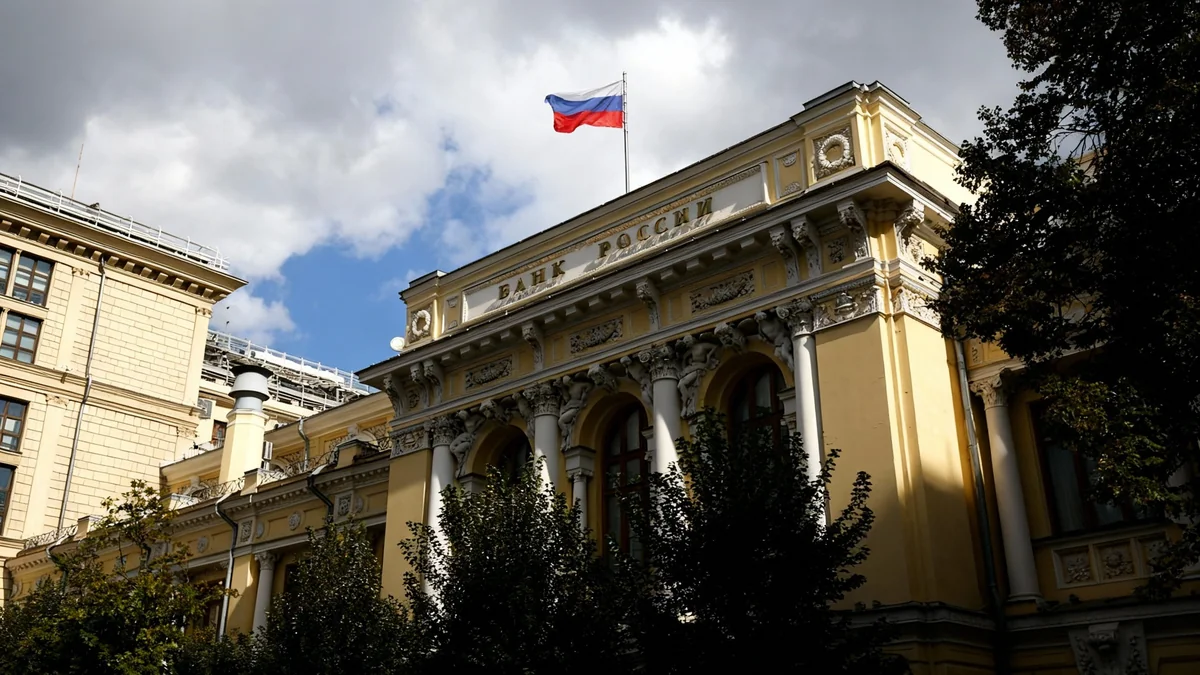

Russia's central bank has declared European Union proposals to utilize its frozen sovereign assets as illegal, vowing to use all available legal means to protect its interests. The bank also confirmed it is initiating a lawsuit in a Moscow court against the Brussels-based financial institution Euroclear, which holds a significant portion of the immobilized funds.
The move signals a significant escalation in the financial standoff between Moscow and the West, raising complex questions about international law and the principle of sovereign immunity.
Key Takeaways
- Russia's central bank has labeled EU plans to use its frozen assets as a violation of international law.
- A lawsuit has been filed in a Moscow court against Euroclear, the financial institution holding many of the assets.
- The EU is considering using profits from the frozen assets, or the assets themselves, to fund aid for Ukraine.
- Russian officials have warned of a "harshest reaction" and may retaliate by seizing private EU assets held in Russia.
Moscow Challenges EU's Financial Strategy
The Bank of Russia issued a stern statement on Friday, directly challenging the legality of any mechanism that would redirect its frozen assets. The central bank's position is that such actions would contravene established principles of international law, particularly the concept of sovereign immunity, which typically protects state assets from seizure by foreign governments.
"Mechanisms of direct or indirect use of the assets of the Bank of Russia, as well as any other forms of unauthorized use of the assets of the Bank of Russia, are illegal and contrary to international law," the bank stated. This declaration serves as a formal notice that Moscow is prepared to fight the proposals in various international legal forums.
The statement specifically mentioned plans to challenge any implementation in national courts, international tribunals, and other judicial bodies. The bank has made it clear it will seek enforcement of any favorable rulings across United Nations member states.
The Lawsuit Against Euroclear
In a concrete step, the central bank confirmed it is suing Euroclear in a Moscow court. The lawsuit alleges that the financial depository's actions have damaged the bank's ability to manage its funds and securities. While many legal experts view a lawsuit within a Russian jurisdiction as largely symbolic with limited enforcement power in the EU, it represents a formal start to Moscow's legal counter-offensive.
Evgeny Kovalyov of the Russian law firm Delcredere noted that executing a Russian court's decision in the EU would be difficult. He suggested that enforcement might be sought in jurisdictions friendly to Russia where European companies, including Euroclear, hold assets.
What Are Frozen Assets?
Following the start of the conflict in Ukraine, Western nations froze hundreds of billions of dollars of Russian sovereign assets held in their financial institutions. These assets, primarily foreign currency reserves and securities, are immobilized, meaning Russia cannot access or move them. The majority of these funds are held in Europe, with a substantial portion at Euroclear in Belgium.
EU's Proposal to Aid Ukraine
The Russian reaction comes as the European Union finalizes plans to indefinitely freeze the Russian central bank assets held within its jurisdiction. This is seen as a critical step toward using the funds to support Ukraine. The European Commission has been exploring several options to leverage these immobilized assets.
An estimated $300 billion in Russian sovereign assets have been frozen globally by Western nations since the conflict in Ukraine began.
One proposal involves using the profits and interest generated by the frozen assets to fund a reparations loan for Ukraine. Another, more aggressive option, would involve the Commission borrowing against the cash balances of the assets themselves to issue financial aid. These plans are designed to provide sustainable financial support for Ukraine's reconstruction and financing needs for 2026 and 2027.
The EU's position is that while the assets themselves are frozen, the windfall profits they generate are not sovereign property in the same way and could be legally repurposed. This distinction is at the heart of the legal debate.
The Risk of Retaliation
Russian officials have not minced words about the potential consequences of the EU's plans. Former President Dmitry Medvedev has previously stated that Russia holds approximately $300 billion of foreign assets in special "C-type" accounts, which were created in response to Western sanctions.
Russian officials have warned that any action against their sovereign assets would be met with "the harshest reaction," suggesting a tit-for-tat seizure of Western assets held in Russia.
These C-type accounts contain assets belonging to investors from what Russia designates as "unfriendly" countries. This includes a wide range of holdings:
- Stock in major Russian companies
- Russian corporate and sovereign bonds
- Cash and proceeds generated from these securities
Legal experts suggest that Russian authorities could activate a mechanism to confiscate these private assets belonging to EU citizens and companies. This creates a high-stakes scenario where private Western investments in Russia could become collateral in a dispute over sovereign state assets.
A Precedent for International Finance
The unfolding situation is being closely watched by the international financial community. The principle of sovereign immunity has long been a cornerstone of the global financial system, assuring central banks that their reserves are safe when held abroad. Any move by the EU to seize or repurpose Russian assets, even the profits, could set a powerful precedent.
Some financial analysts worry that such a move could lead other nations to reconsider holding their reserves in Western currencies or institutions, potentially accelerating a shift away from the U.S. dollar and the euro as primary reserve currencies. The outcome of this legal and financial battle will likely have repercussions for international law and global finance for years to come.