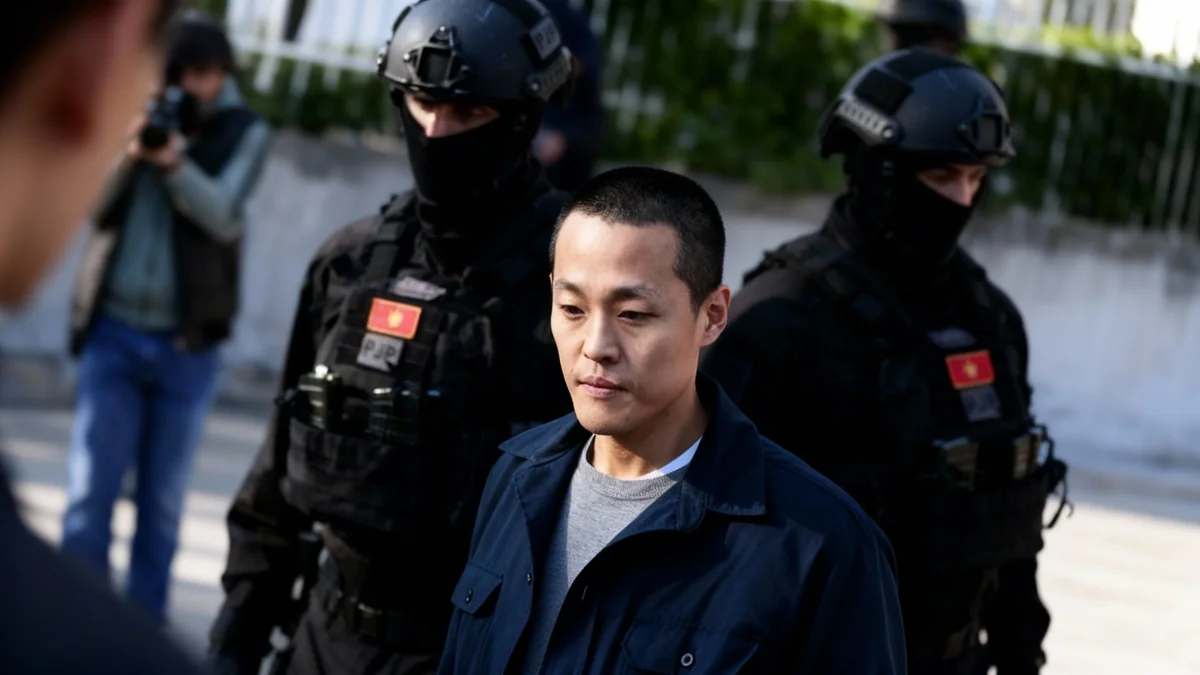

Do Kwon, the co-founder of Terraform Labs, was sentenced to 15 years in federal prison on Thursday for his role in the collapse of the TerraUSD and Luna cryptocurrencies. The scheme resulted in an estimated $40 billion in investor losses in 2022, sending shockwaves through the digital asset market.
During the sentencing in a Manhattan federal court, U.S. District Judge Paul A. Engelmayer described the case as a "fraud on an epic, generational scale." Kwon, 34, had previously pleaded guilty to charges including conspiracy to defraud and wire fraud.
Key Takeaways
- Do Kwon received a 15-year prison sentence for orchestrating a massive cryptocurrency fraud.
- The collapse of TerraUSD and Luna tokens wiped out an estimated $40 billion from the market in 2022.
- The judge called the scheme an "epic fraud," highlighting the severe impact on everyday investors.
- Kwon admitted to misleading investors about the stability of the TerraUSD stablecoin.
- In addition to the prison sentence, Kwon faces a significant civil settlement with the SEC.
An 'Epic Fraud' Comes to a Close
The sentencing hearing brought a conclusion to a case that has been closely watched by both the cryptocurrency industry and financial regulators. Judge Engelmayer delivered a stern rebuke to Kwon, emphasizing the devastating consequences of his actions on thousands of individual investors who had placed their trust and savings in his projects.
"In the history of federal prosecutions, there are few frauds that have caused as much harm as you have, Mr. Kwon," Judge Engelmayer stated during the proceedings.
Dressed in yellow prison attire, Kwon addressed the court and offered an apology to his victims. He acknowledged the hundreds of letters submitted by those who suffered financial ruin. "All of their stories were harrowing and reminded me again of the great losses that I’ve caused," Kwon said. "I want to tell these victims that I am sorry."
Background of the Terra/Luna Collapse
Terraform Labs, co-founded by Kwon, created two interconnected tokens: TerraUSD (UST), an algorithmic stablecoin intended to maintain a 1:1 peg with the U.S. dollar, and Luna, a governance token designed to absorb UST's volatility. The system collapsed in May 2022 when UST lost its peg, causing a hyperinflationary spiral in Luna and erasing the value of both tokens within days.
The Deception Behind the Stablecoin
Prosecutors detailed how Kwon deliberately misled investors about the mechanics of TerraUSD. The core of the fraud charge revolved around an incident in May 2021 when TerraUSD briefly slipped below its $1 peg. Kwon and his company claimed that the protocol's own algorithm had successfully restored the peg, showcasing the system's resilience.
However, investigators found this was not the case. Instead, Kwon had secretly arranged for a third-party high-frequency trading firm to purchase massive quantities of TerraUSD on the open market. This intervention artificially propped up the price and restored the peg, creating a false narrative of the algorithm's effectiveness.
During his guilty plea in August, Kwon admitted to this deception. "I made false and misleading statements about why it regained its peg by failing to disclose a trading firm’s role in restoring that peg," he stated in court. "What I did was wrong."
Charges and Guilty Plea
- Initial Charges: Kwon was charged in January with nine criminal counts, including securities fraud, wire fraud, and commodities fraud.
- Guilty Plea: He later pleaded guilty to two key counts: conspiracy to defraud and wire fraud.
- Investor Losses: The total estimated loss from the collapse stands at approximately $40 billion.
Victims Recount Devastating Losses
The human cost of the collapse was a central theme at the sentencing. Hundreds of victims from around the world submitted letters to the court, detailing their financial and personal devastation. Many had invested their life savings, retirement funds, and money set aside for their children's futures into the Terra ecosystem, believing it to be a safe, stable investment.
One such victim, Ayyildiz Attila, described losing between $400,000 and $500,000. "My savings, my future, and the results of years of sacrifice disappeared," Attila wrote. "I struggled to keep up with payments and responsibilities, and everything I had worked for was erased."
Prosecutors had initially requested a sentence of at least 12 years, arguing that the scale of the financial damage and the ripple effect it had on the broader crypto market warranted a significant punishment. U.S. Attorney Jay Clayton said Kwon devised elaborate schemes and then attempted to flee when they unraveled.
Legal Ramifications and Future Proceedings
Kwon's legal troubles are not limited to this criminal sentence. In 2024, he and Terraform Labs reached a massive $4.55 billion settlement with the U.S. Securities and Exchange Commission (SEC) in a separate civil case. As part of that agreement, Kwon is personally liable for an $80 million civil fine and is permanently banned from participating in crypto transactions.
Kwon’s defense team had argued for a shorter sentence of no more than five years. They pointed to his remorse and his desire to return to his native South Korea, where he also faces criminal charges related to the collapse.
The plea agreement includes a provision that U.S. prosecutors will not oppose an application for Kwon to be transferred to South Korea after he has served at least half of his 15-year U.S. sentence. This suggests he will likely face further legal proceedings in his home country after completing a significant portion of his time in an American prison.