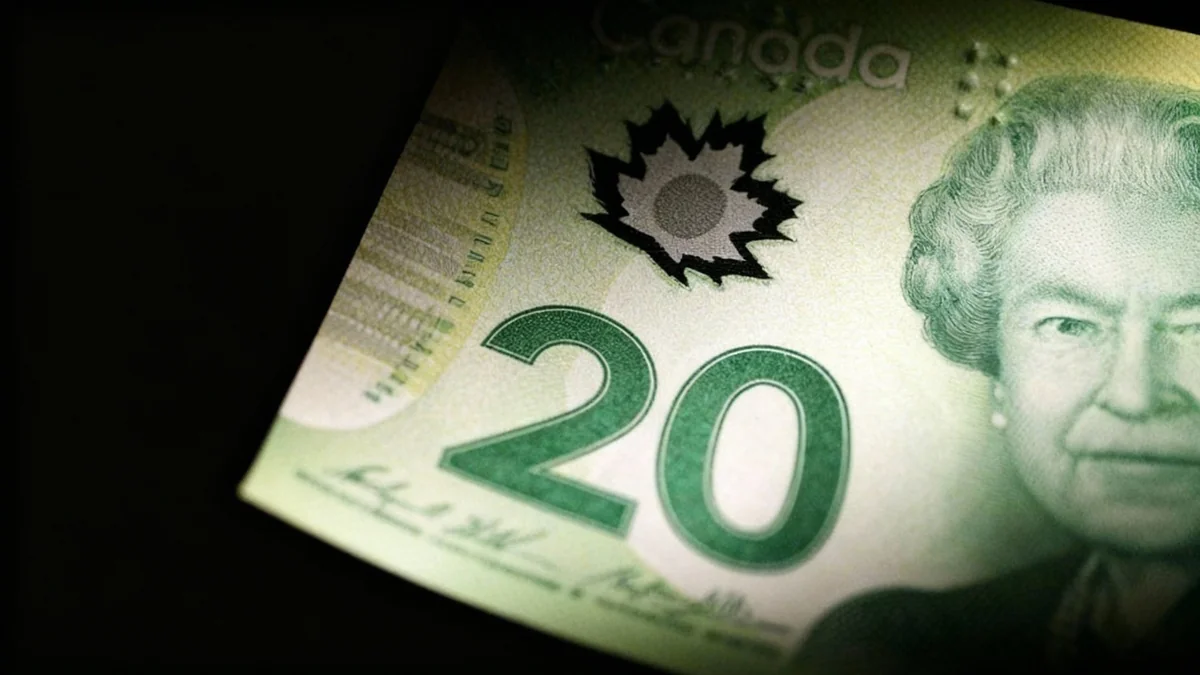

The Canadian dollar surged to its highest point in over two months against the U.S. dollar on Friday, following the release of unexpectedly strong domestic employment data. The report, which showed significant job growth for the third consecutive month, has shifted market expectations regarding the Bank of Canada's future interest rate decisions.
The currency, often called the "loonie," saw its largest single-day gain in over six months. This rally was also supported by a rise in oil prices, a key Canadian export, further bolstering the nation's economic outlook and putting pressure on currency traders.
Key Takeaways
- The Canadian dollar reached its strongest level against the U.S. dollar since September 24, trading at 1.3854 per USD.
- Canada's economy added 53,600 jobs in November, far exceeding analyst expectations and marking the third straight month of robust gains.
- The unemployment rate fell to a 16-month low, signaling a resilient labor market.
- Market sentiment has shifted, with investors now fully pricing in a Bank of Canada interest rate hike in 2026, a significant change from previous forecasts.
Robust Labor Market Fuels Currency Surge
The primary catalyst for the Canadian dollar's impressive performance was a jobs report that defied expectations. The national economy added 53,600 new jobs in November, a figure that points to sustained momentum in the labor market. This marks the third month in a row that job creation has been exceptionally strong.
As a result of this hiring spree, the national unemployment rate dropped to a 16-month low. This positive development suggests that the Canadian economy is on solid footing, weathering global economic uncertainties better than many had anticipated. The consistent strength in employment is a critical indicator for the country's central bank as it formulates monetary policy.
On Friday, the loonie strengthened by 0.7% to trade at 1.3854 per U.S. dollar, which translates to approximately 72.18 U.S. cents. This not only represents a 10-week high for the currency but also its most significant single-day advance since May 23.
Bank of Canada Policy in the Spotlight
The surprisingly strong labor data has significant implications for the Bank of Canada (BoC). The central bank is scheduled to make its next policy announcement on December 10, and the latest economic figures are expected to heavily influence its decision.
Central Bank's Position
Prior to the November jobs report, there was some speculation about whether the Bank of Canada might consider further interest rate cuts to stimulate the economy. The bank's current benchmark interest rate stands at a three-year low of 2.25%. However, recent data, including higher-than-expected Q3 GDP growth and persistent core inflation above the 2% target, had already made a rate cut seem unlikely.
Economists now widely believe that the prospect of a rate cut is off the table. The resilient job market provides the BoC with ample reason to maintain its current policy stance. Nathan Janzen, assistant chief economist at Royal Bank of Canada, noted that the November labor data likely cements the decision to hold rates steady.
"The Bank of Canada was already unlikely to cut interest rates further... The November labour market data likely cements that decision, and also is consistent with our base case that the BoC will not need to reduce interest rates again through next year," Janzen stated in a note to clients.
This sentiment is now reflected in the financial markets, where investor expectations have undergone a dramatic shift. According to swap market data, traders have moved from pricing in a mere 20% chance of an interest rate hike in 2026 to now fully pricing one in. This indicates a strong belief that the next move from the BoC will be to tighten, not loosen, monetary policy.
Bond Yields and Oil Prices Add Momentum
The market's reaction extended beyond currency trading. Canadian government bond yields rose sharply across the board as investors adjusted their positions in response to the jobs data. The yield on the 2-year bond, which is particularly sensitive to changes in interest rate expectations, jumped by 16.7 basis points to 2.631%.
Market Reaction at a Glance
- Currency: CAD gained 0.7% against USD, its best day since May.
- 2-Year Bond Yield: Increased by 16.7 basis points to 2.631%.
- Oil Prices: U.S. crude oil futures rose 1.2% to $60.37 a barrel.
This surge in yields reflects the market's conviction that the central bank will need to adopt a more hawkish stance to keep inflation in check amid a strong economy. The 2-year yield even touched its highest level since September 3 earlier in the session.
The Influence of Oil
Adding another layer of support for the Canadian dollar was a concurrent rise in the price of oil. As one of Canada's largest exports, the value of crude oil has a direct impact on the country's trade balance and, consequently, its currency.
On Friday, U.S. crude oil futures climbed 1.2% to settle at $60.37 a barrel. The increase was attributed to geopolitical factors, including stalled peace talks in Ukraine, which raised concerns about potential supply disruptions. This positive movement in the energy markets provided an additional tailwind for the loonie, complementing the strength derived from the domestic jobs report.
Economic Outlook and Future Trajectory
The convergence of a strong labor market, shifting central bank expectations, and rising commodity prices paints a more optimistic picture for the Canadian economy heading into the new year. The resilience shown over the past three months suggests that Canada may be well-positioned to navigate potential global headwinds.
All eyes will now be on the Bank of Canada's announcement next week. While no change in the 2.25% benchmark rate is expected, the tone of the bank's statement will be scrutinized for clues about its future policy path. Any language acknowledging the economy's underlying strength could further reinforce the Canadian dollar's recent gains.
For now, the robust job creation serves as a powerful signal that the Canadian economy has a solid foundation, a factor that is likely to keep the currency well-supported in the near term.