
The intricate plumbing of the U.S. financial system is showing early signs of strain, as key overnight lending markets experience tremors reminiscent of the 2019 liquidity squeeze. In mid-September, the Federal Reserve's backstop lending facility saw its largest-ever usage, signaling that banks are growing more cautious about providing short-term cash.
This development, combined with elevated borrowing rates, suggests that the vast reserves propping up the market may not be as readily available as they appear, raising concerns about the system's resilience to unexpected shocks.
Key Takeaways
- The Federal Reserve's Standing Repo Facility (SRF) was tapped for approximately $18.5 billion in a single day in mid-September, its largest draw on record.
- The Secured Overnight Financing Rate (SOFR), a benchmark for short-term borrowing, rose to 4.42% during the period of stress and remained elevated.
- These events indicate a tightening of liquidity, where cash is becoming more scarce or expensive in critical overnight funding markets.
- Analysts are monitoring the situation as a potential early warning, though it has not yet reached the crisis levels seen in September 2019.
A Canary in the Coal Mine
The financial system relies on a massive, unseen network of overnight loans known as the repurchase, or "repo," market. This market allows financial institutions to borrow cash for short periods, typically overnight, using U.S. Treasury securities as collateral. It is the essential lubricant that keeps the gears of the economy turning smoothly.
Recently, this critical system has begun to creak. In mid-September, banks and other financial firms turned to the Federal Reserve's Standing Repo Facility (SRF) for a record $18.5 billion in liquidity. The SRF was established as a safety valve to prevent market freezes, and its significant use suggests that private lenders were either unable or unwilling to meet the demand for cash.
This is not a sign of panic, but it is a clear signal of caution. When private firms step back from lending, even for a day, it forces others to rely on the central bank. This behavior indicates that the buffer of excess cash in the system is becoming thinner than many policymakers might find comfortable.
What is the Repo Market?
Think of the repo market as a giant, overnight pawn shop for financial institutions. A bank needing cash can provide Treasury bonds as collateral to a lender (like a money market fund) in exchange for an overnight loan. The next day, it repays the loan with a small amount of interest to get its bonds back. This market moves trillions of dollars daily and is fundamental to the liquidity of the entire financial system.
Echoes of 2019's Market Seizure
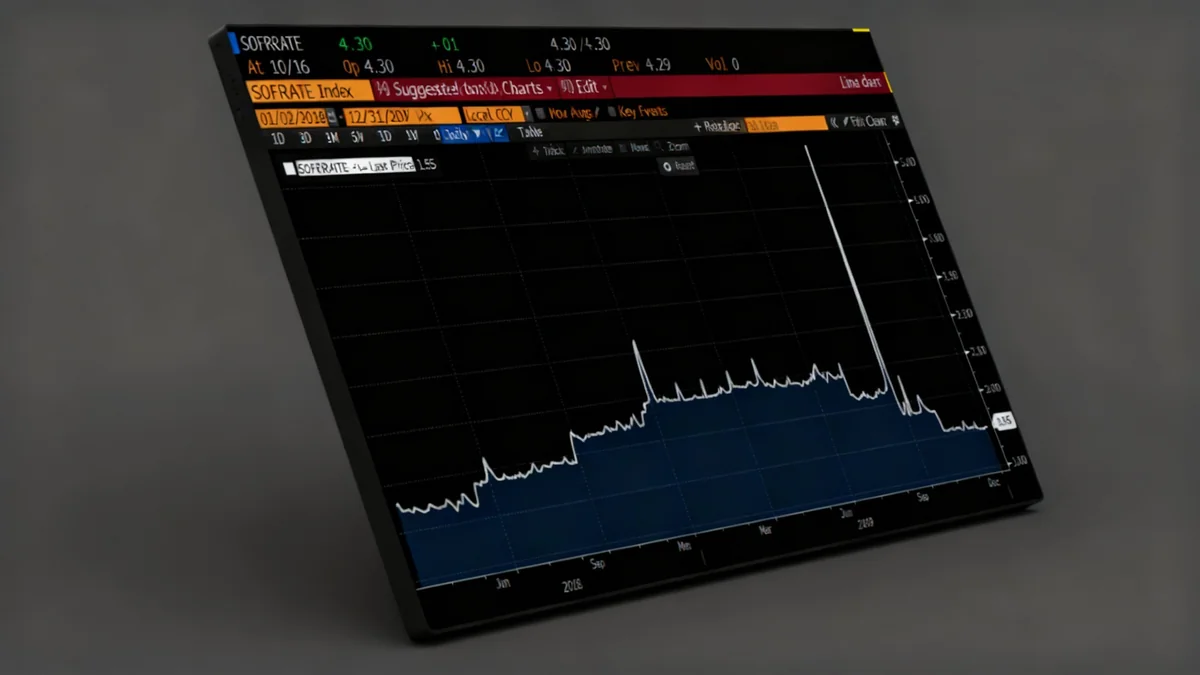
For market veterans, the recent events bring back memories of September 2019. At that time, a sudden cash drain caused by corporate tax payments and Treasury auction settlements led to a dramatic spike in borrowing rates. The benchmark SOFR surged from around 2% to an unprecedented 5.25% in a single day, forcing the New York Fed to intervene with emergency liquidity injections.
That episode revealed a critical vulnerability: even with what was considered "ample reserves," the cash was not always in the right hands at the right time. Regulatory requirements made some large banks hesitant to lend out their reserves, causing the market to seize up unexpectedly.
The Current Pressures
While today's reserve levels are significantly higher than in 2019, similar pressures are building. Several factors are contributing to the current tightness:
- Tax Deadlines and Treasury Settlements: Just like in 2019, predictable events that pull large amounts of cash out of the banking system can strain liquidity.
- Increased Treasury Issuance: The government is issuing a large volume of short-term debt, which competes for the same pool of available cash.
- Growing Risk Aversion: Recent reports of souring debt on some bank balance sheets, alongside the failures of firms like First Brands Group and Tricolor Holdings, have made lenders more cautious.
These forces have pushed the SOFR rate higher. In the first week of September, it rose by five to eight basis points, while another key rate, the Tri-Party General Collateral Rate (TGCR), jumped by about 10 basis points. While these moves are modest compared to 2019, they are clear indicators of a system operating with less slack.
Understanding SOFR
The Secured Overnight Financing Rate (SOFR) is a broad measure of the cost of borrowing cash overnight collateralized by Treasury securities. It replaced the older LIBOR standard and is now a critical benchmark for trillions of dollars in financial contracts. A sudden spike in SOFR indicates a sharp increase in the demand for cash or a decrease in its supply.
Watching the Spreads and Balances
Analysts are now closely watching several key metrics to gauge the health of the funding markets. One important indicator is the spread between SOFR and the interest rate the Fed pays on reserve balances (IORB). A widening spread suggests that it is becoming more expensive to source cash in the private market than to simply park it at the Fed, a classic sign of funding stress.
Another area of focus is the total level of reserve balances in the banking system. These balances have been declining as the Fed normalizes its balance sheet, even as the amount of Treasury securities needing to be financed continues to grow. This dynamic effectively tightens the supply of cash relative to the demand for it.
The Dallas Fed has described current funding conditions as still "ample" but trending toward constraint—a diplomatic acknowledgement that the system's margin for error is narrowing.
Forward-looking contracts already suggest that market participants expect this tightness to continue. Contracts for late-year settlements are pricing SOFR at roughly 7–8 basis points above the Effective Federal Funds Rate (EFFR), another sign of anticipated pressure.
Not a Crisis, But a Warning
It is important to emphasize that the current situation is not a repeat of 2019, let alone a full-blown crisis. The financial system is better equipped today, with tools like the SRF specifically designed to prevent a market collapse. The facility worked as intended by providing a necessary backstop when private liquidity dried up.
However, the flickering warning lights cannot be ignored. The recent events serve as a stress test, highlighting how quickly routine market operations can become strained when liquidity buffers shrink. The system remains delicately balanced, and an unforeseen event—such as a major settlement failure or a sudden retreat by a large dealer—could still trigger a sharp and disruptive spike in funding rates.
For now, the financial plumbing is holding, but the creaks are getting louder. Regulators and market participants will be watching closely to see if these early signs of stress escalate or subside in the coming months.