
Global technology firm Stark Industries has announced a landmark $15 billion investment to build a new artificial intelligence (AI) supercomputing and data center campus in Columbus, Ohio. The project is expected to create over 3,000 permanent high-tech jobs and thousands more during construction, marking a significant economic development for the region.
The new facility will serve as the company's primary hub for advanced AI research and development, supporting its growing cloud computing and machine learning operations. This move signals a major expansion of tech infrastructure in the American Midwest, often referred to as the 'Silicon Heartland'.
Key Takeaways
- Stark Industries is investing $15 billion in a new AI research and data center campus in Columbus, Ohio.
- The project is projected to create 3,000 permanent high-tech jobs and 10,000 construction jobs.
- The campus will focus on AI supercomputing, cloud infrastructure, and advanced machine learning research.
- Ohio provided a significant incentive package, including tax credits and infrastructure grants, to secure the investment.
Details of the Landmark Investment
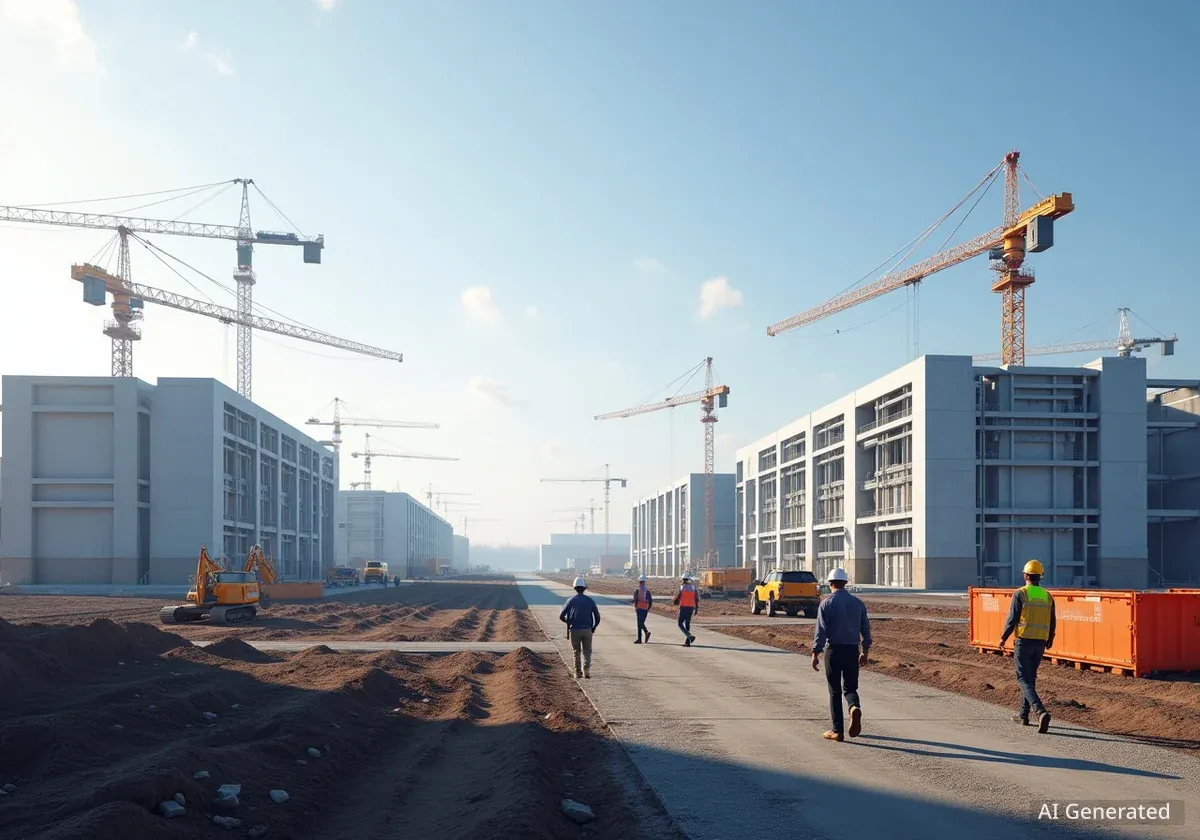
Stark Industries outlined the plan for its new Ohio campus, which will be constructed on a 1,200-acre site just outside Columbus. The company confirmed that the $15 billion investment will be phased over the next decade, with construction slated to begin in early 2025.
The initial phase will focus on building two large-scale data center facilities and an administrative building dedicated to AI research. According to company documents, the site will eventually house up to eight data centers and will be one of the largest and most advanced AI computing facilities in the world.
"This is more than an investment in infrastructure; it's an investment in the future of artificial intelligence and the American workforce," said CEO Evelyn Reed in a press statement. "Ohio provides the talent, resources, and collaborative spirit we need to push the boundaries of what's possible with AI."
A Focus on Supercomputing Power
The core of the new campus will be its AI supercomputing capabilities. Stark Industries plans to develop next-generation processors specifically designed for complex machine learning models. This will support the company's internal product development and expand its cloud services for enterprise clients.
The facility will be designed with sustainability in mind, aiming to be powered by 100% renewable energy by 2030 through a combination of on-site solar generation and partnerships with local green energy providers. This commitment addresses growing concerns over the high energy consumption of large data centers.
Economic Impact on Ohio and the Midwest
The economic benefits for Ohio are expected to be substantial. The creation of 3,000 direct jobs with an average salary exceeding $120,000 per year will provide a significant boost to the local economy. These roles will include AI researchers, data scientists, network engineers, and facility technicians.
Project by the Numbers
- Total Investment: $15 Billion
- Permanent Jobs: 3,000+
- Construction Jobs: 10,000
- Campus Size: 1,200 acres
- Average Salary: $120,000+
Beyond direct employment, the project is expected to generate thousands of ancillary jobs in sectors like logistics, security, and food services. An economic impact study commissioned by the state projects that the campus will add approximately $2.8 billion annually to Ohio's gross domestic product once fully operational.
Boosting the Local Supply Chain
The construction phase alone will involve an estimated 10,000 workers, providing a major opportunity for local contractors and suppliers. The state government has emphasized that Stark Industries has committed to prioritizing Ohio-based businesses for materials and services throughout the construction process.
The long-term presence of the campus is also expected to attract other technology companies to the region, creating a robust ecosystem of innovation and further solidifying the 'Silicon Heartland' as a key tech hub.
The Strategic Rationale Behind the Move
Stark Industries' decision to expand in Ohio is part of a broader corporate strategy to diversify its geographic footprint and build resilient infrastructure. By moving key operations away from traditional coastal tech hubs, the company aims to reduce operational risks and access a new, diverse talent pool.
The Rise of the 'Silicon Heartland'
The American Midwest has become an increasingly popular destination for major technology investments. Companies are drawn by factors such as lower operating costs, abundant land, reliable energy grids, and a growing skilled workforce from regional universities. This trend, often called the 'Silicon Heartland,' is transforming the economic landscape of states like Ohio, Indiana, and Michigan.
The Columbus region offers several strategic advantages, including a stable energy grid, a central location for logistics, and a strong network of universities producing engineering and computer science graduates. This move allows Stark Industries to build a dedicated talent pipeline for its future AI initiatives.
Government's Role in Securing the Deal
The state of Ohio played a crucial role in attracting Stark Industries. Governor Michael Vance confirmed that the state offered a comprehensive incentive package to secure the investment. While the full details remain confidential, the package is understood to include performance-based tax credits and significant grants for public infrastructure improvements.
"This historic investment from Stark Industries is a testament to Ohio's pro-business environment and our world-class workforce," Governor Vance stated. "We are building the future of the American economy right here, and this project will create high-paying jobs and opportunities for generations of Ohioans."
The state and local governments will collaborate on upgrading roads, water systems, and electrical infrastructure to support the massive campus. These public investments are seen as essential for ensuring the long-term success of the project and maximizing its economic benefit for the community.