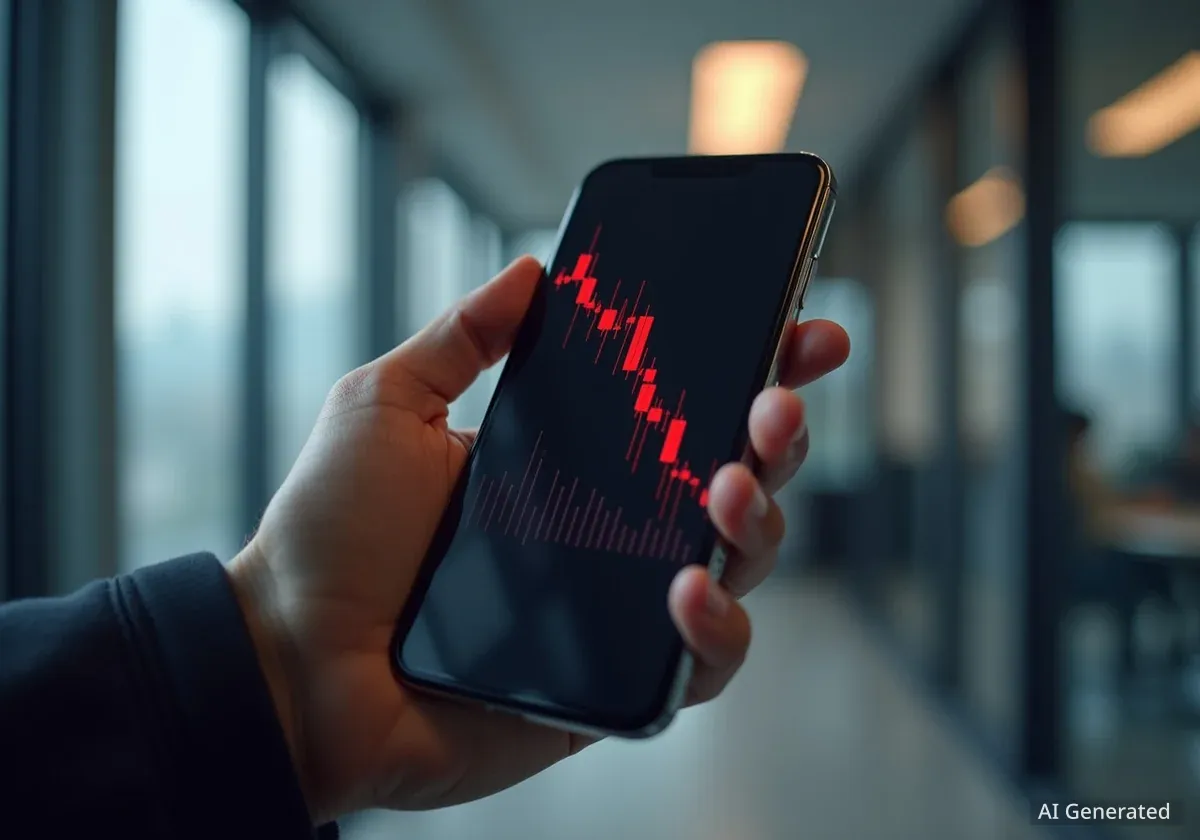

Recent market turmoil, which erased over $20 billion in value, has once again highlighted the significant dangers associated with high-leverage trading in the cryptocurrency markets. While speculative trading is a common feature of digital assets, the use of leverage magnifies both potential gains and, more critically, the risk of catastrophic losses that can liquidate an entire portfolio in minutes.
Key Takeaways
- High-leverage trading in cryptocurrency multiplies exposure to market volatility, leading to rapid and total loss of capital, a process known as liquidation.
- A recent market event resulted in cascading liquidations, wiping out approximately $20 billion in leveraged positions and demonstrating the systemic risks involved.
- Factors beyond market movement, such as exchange infrastructure failures and low liquidity on certain assets, add layers of unpredictable risk for traders.
- Experts advise that leverage should be treated as a high-risk tool, used only with capital that one can afford to lose entirely, rather than funds allocated for long-term financial security.
The Mechanics of Leverage and Liquidation
Leverage in trading allows an individual to control a larger position with a smaller amount of initial capital. For example, with 50x leverage, a trader can open a $50,000 position with only $1,000 of their own money. The exchange provides the remaining $49,000 as a loan.
While this can amplify profits if the market moves in the desired direction, it creates an extremely narrow margin for error. A small adverse price movement can wipe out the trader's initial capital, known as the margin. In the 50x leverage example, a mere 2% price drop against the position would erase the entire $1,000 margin.
What is a Liquidation Event?
When the price moves against a leveraged position to the point where the initial margin is nearly gone, the exchange automatically closes the position to prevent further losses and to ensure its loan is repaid. This forced closure is called a liquidation. The trader loses their entire initial investment.
During periods of high volatility, these events can happen in seconds, often too fast for a trader to react or add more funds to their account. This is a primary risk that many participants underestimate.
By the Numbers: The Impact of Leverage
A 10% price move against a position would result in the following losses based on leverage:
- 1x Leverage (Spot): 10% loss
- 5x Leverage: 50% loss
- 10x Leverage: 100% loss (Liquidation)
- 50x Leverage: 500% loss (Liquidation occurs long before this point)
The Domino Effect of Cascading Liquidations
Individual liquidations can trigger a much larger market event known as cascading liquidations. This phenomenon was a key factor in the recent $20 billion market downturn. It creates a powerful feedback loop that accelerates price drops.
The process begins when a significant price drop triggers an initial wave of liquidations for highly leveraged long positions. Because a liquidation is a forced market sell order, this sudden selling pressure pushes the asset's price down even further.
This new, lower price then triggers the liquidation of the next tier of leveraged positions, which were previously safe. This adds more forced selling to the market, driving the price down again. This cycle continues, creating a cascade that can erase billions in value within a very short period.
"Once a liquidation cascade begins, individual traders have almost no control. The market is driven by automated, forced selling, and fundamental analysis or trading strategies become irrelevant in the short term."
Systemic Risks Beyond Market Volatility
While price movement is the most obvious risk, traders using leverage on cryptocurrency exchanges face other significant threats that are often overlooked. These systemic issues can lead to losses even if a trader's market prediction was correct.
Understanding Platform Risk
Centralized cryptocurrency exchanges are complex technological platforms. During extreme market volatility, they can experience technical glitches, server overloads, or scheduled maintenance. If a trader cannot access their account to close a position or manage their margin during a critical moment, they can be liquidated due to platform failure, not a poor trading decision.
Key Systemic Risks Include:
- Infrastructure Failure: Exchanges may freeze or become unresponsive during peak trading times, preventing users from managing their positions.
- Low Liquidity: Trading less popular altcoins with high leverage is especially dangerous. A lack of buyers can cause prices to plummet dramatically during a sell-off, leading to faster and more severe liquidations.
- Lack of Regulatory Guardrails: Unlike traditional financial markets, the crypto space often lacks robust consumer protections. There are fewer safeguards to prevent exchanges from offering extremely high leverage or to compensate users for losses due to technical failures.
A Prudent Approach to High-Risk Speculation
The allure of outsized gains from leverage is strong, but it must be balanced with a clear understanding of the risks. Financial experts consistently advise a separation between investment capital and speculative capital.
Investment capital is money designated for long-term goals, such as retirement or savings, and should be protected from high-risk scenarios. Speculative capital, on the other hand, is a smaller amount of money that an individual can afford to lose entirely without impacting their financial future.
Strategies for Risk Management
For those who choose to engage in speculative trading, several principles can help mitigate catastrophic losses:
- Use Low or No Leverage: The simplest way to avoid liquidation is to trade on the spot market (1x leverage) or use very low leverage (2x-3x) that provides a wide margin for price fluctuations.
- Implement Stop-Loss Orders: A stop-loss is an automated order to close a position at a predetermined price, limiting potential losses before a full liquidation can occur. However, in a fast-moving market, stop-loss orders may not execute at the desired price.
- Never Risk More Than You Can Lose: This fundamental rule is the most important. Before entering a leveraged trade, a trader must be fully prepared for the possibility of losing their entire initial margin.
- Take Time to Reflect: The digital interface of trading can make high-stakes decisions feel detached. Stepping away from the screen for a few minutes before confirming a highly leveraged trade can provide critical perspective on whether the potential reward justifies the risk of total loss.
Ultimately, personal agency is paramount. While debates continue about whether exchanges and regulators should implement stricter controls, the individual trader holds the final responsibility for protecting their own financial well-being. Understanding that high leverage is a form of gambling, not investing, is the first step toward making responsible decisions in a volatile market.