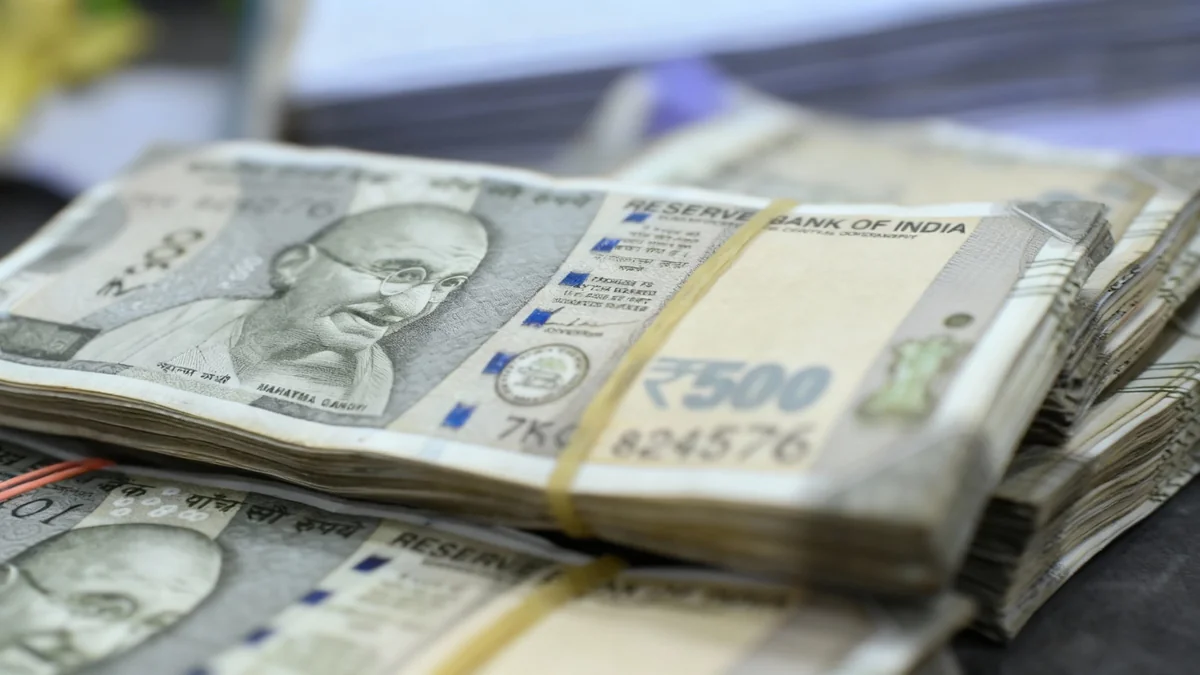

The Indian rupee recently crossed the significant mark of 90 per dollar, hitting a new record low. This depreciation comes as a crucial trade agreement with the United States faces continued delays, impacting market sentiment and India's economic outlook. The currency weakened by as much as 0.5% during trading.
Key Takeaways
- The Indian rupee breached 90 per dollar, setting a new record low.
- Delays in a US-India trade deal are a major factor in the rupee's decline.
- The Reserve Bank of India intervened by selling dollars to curb losses.
- India's trade deficit and current-account gap have widened significantly.
- Analysts suggest the rupee could further weaken if it closes above 90.
Rupee Reaches New Low Amid Trade Uncertainty
On Wednesday, the Indian rupee's value dropped to 90.2950 per dollar, marking a historic low. This decline is largely attributed to ongoing uncertainties surrounding a trade agreement between India and the United States. The lack of a finalized deal continues to put pressure on the currency and broader financial markets.
The pessimism extended to the equity market, with the benchmark NSE Nifty 50 Index experiencing a decline of up to 0.5%. This synchronized movement highlights the interconnectedness of currency and stock market performance in response to macroeconomic factors.
Quick Fact
The rupee has depreciated by approximately 5% this year, making it the weakest-performing currency in Asia. This slide occurred even after official data showed India's economy grew at its fastest pace in six quarters.
RBI Intervenes to Stabilize Currency
Following the sharp depreciation, the Reserve Bank of India (RBI) reportedly intervened in the market. Sources familiar with the transactions indicated that the central bank sold dollars in small amounts. This action helped the rupee pare some of its earlier losses, demonstrating the RBI's efforts to manage currency volatility.
"Exporters are not selling dollars aggressively since the rupee is on a depreciating trend, while the dollar demand from importers remains high," said Ritesh Bhansali, deputy chief executive officer at Mecklai Financial Services.
This situation creates a challenging environment for both exporters and importers. Exporters hold onto dollars expecting further depreciation, while importers face higher costs due to a stronger dollar.
Impact of Delayed Trade Deal
India remains one of the few major global economies yet to finalize a trade pact with the United States. Despite optimism from officials about an imminent agreement, the delays have tangible economic consequences. Steep 50% tariffs on Indian goods have particularly affected exporters, reducing their competitiveness in the US market.
Conversely, strong import demand within India has increased the need for dollars, further contributing to the rupee's weakening. These combined factors have led to a significant widening of India's trade deficit and current-account gap, signaling an imbalance in the country's international transactions.
Context: Trade Deficit
A trade deficit occurs when a country's imports exceed its exports. A widening trade deficit can put downward pressure on a nation's currency as more local currency is exchanged for foreign currency to pay for imports.
Barclays strategists believe that a trade deal with Washington is the most likely factor to provide immediate relief for the rupee. Without such a deal, market analysts anticipate continued pressure on the currency.
Future Outlook for the Rupee
With the 90 per dollar level now breached, analysts are closely watching for further movements. HDFC Securities warned that the rupee could potentially slip further to 90.30 in the coming days. The psychological impact of crossing such a key threshold can trigger additional speculative selling.
Kotak Securities Ltd. emphasized the need for more decisive intervention from the Reserve Bank of India to curb speculative pressure. The market is now looking for strong signals from the central bank to restore confidence and stabilize the currency.
"If they allow the rupee to close above 90, we could see further speculative bets and the possibility of the rupee heading to 91," stated Anindya Banerjee, a currency analyst at Kotak Securities.
Banerjee also commented that the recent slide is "hard to justify on a fundamental basis," suggesting that market sentiment and speculative activity are playing a significant role beyond underlying economic indicators. The rupee's sustained weakness might also influence the RBI's monetary policy decisions.
Monetary Policy Implications
The rupee's depreciation could impact the RBI's upcoming policy review. Kunal Sodhani, head of treasury at Shinhan Bank in Mumbai, suggested that the central bank might keep interest rates steady. Hopes for a rate cut had already diminished after stronger-than-expected economic growth data released last week.
Before the recent GDP data, RBI Governor Sanjay Malhotra had indicated the possibility of rate cuts, citing record-low inflation. However, the current currency instability adds another complex layer to the central bank's decision-making process, prioritizing stability over potential growth stimulus.
The interplay between currency weakness, trade negotiations, and monetary policy will continue to shape India's economic landscape in the near term. Market participants will be closely monitoring both the progress of the US-India trade deal and the RBI's actions to manage currency fluctuations.