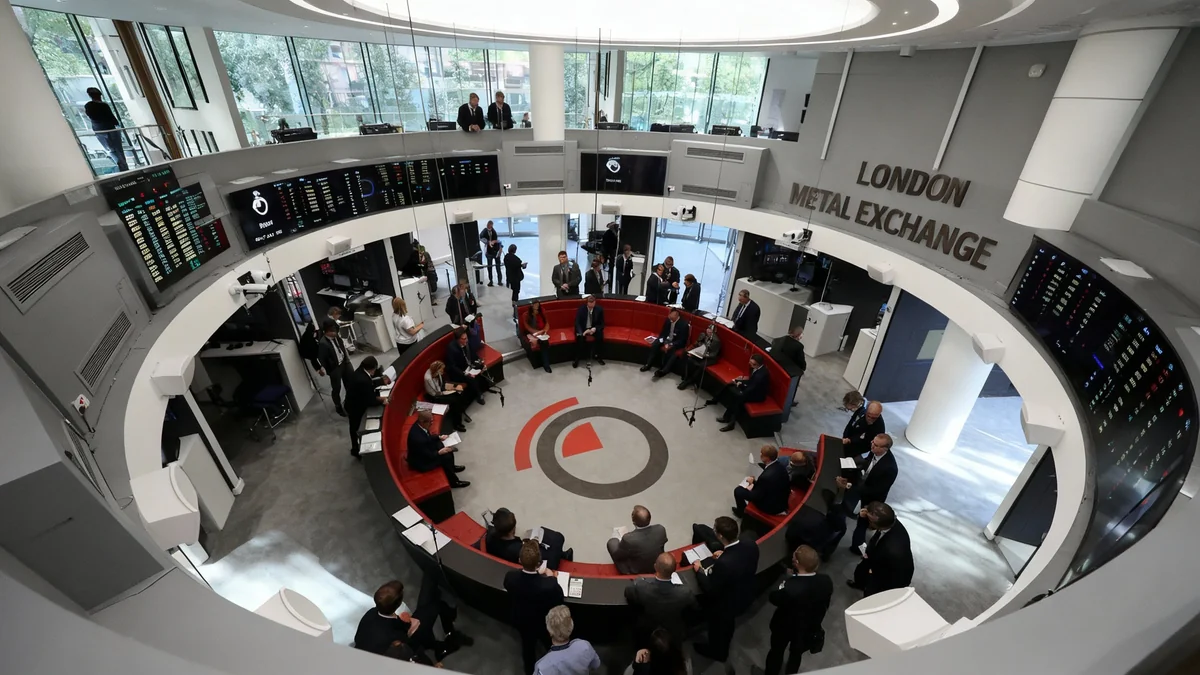

The global metal markets are undergoing significant transformations, driven by geopolitical tensions, evolving supply chains, and a growing focus on sustainability. Recent discussions at London Metal Exchange (LME) Week highlighted key shifts, including new pricing mechanisms for 'green' metals, intense pressure on smelters, and a strong bullish outlook for copper and aluminum.
Key Takeaways
- HKEx launched a Dubai subsidiary to administer 'green' metal premiums.
- Smelters face severe margin pressure due to overcapacity in China.
- Copper demand is projected to surge 24% by 2035, driving price optimism.
- Aluminum supply dynamics are shifting, with analysts turning bullish.
- China's export restrictions on critical minerals like germanium are causing price spikes and supply concerns.
New Focus on Green Metal Premiums
The London Metal Exchange's parent company, Hong Kong Exchanges and Clearing (HKEx), announced a new subsidiary in Dubai: Commodity Pricing and Analysis Ltd (CPAL). This new entity will manage the rollout of 'green' premiums for metals. The initiative leverages the LME's responsible sourcing criteria and data from the digital platform Metalshub.
Metalshub, a key player in the digital metals trading space, reported transacting over $220 million in Class I refined nickel during 2023. Since March 2024, it has traded 488 tons of 'green-ish' nickel. This category defines metal with a carbon footprint below 20 metric tons per ton of metal.
Fact Check
Metalshub traded 488 tons of 'green-ish' nickel since March 2024, defining it as metal with a carbon footprint below 20 metric tons per ton.
The goal is to use Metalshub's pricing data to establish a sustainable nickel premium. This could then serve as a model for other essential industrial metals, including copper and aluminum. If there are not enough trades to set a premium, CPAL will use 'structured expert judgment' to determine the levels, assuming a premium will always exist for sustainable products.
This move positions HKEx as a new player in the price reporting agency sector, traditionally dominated by firms like Fastmarkets and S&P Global Platts. The choice of Dubai for the new subsidiary is also strategic. HKEx views it as a way to improve connectivity between China and the rapidly expanding metal markets across the Middle East.
Smelters Under Pressure from Mining Sector
A significant point of discussion at LME Week was the relationship between smelters and miners. Richard Holtum, chief executive of trade house Trafigura, emphasized the critical role of smelting. He stated,
"You don't have security if you just have stuff in the ground."Holtum argued that the West needs more base metal smelters to produce exotic metals like gallium and germanium, crucial for breaking China's dominance in these areas.
This argument has gained traction, particularly in Australia, where the government pledged A$135 million ($87.4 million) to support two of Trafigura's plants. The broader context for this concern is a dramatic collapse in smelting fees for copper and, to a lesser extent, zinc. China's aggressive expansion of its processing capacity has squeezed profit margins for smelters globally.
Market Context
Spot copper treatment terms are currently negative, meaning smelters are not earning their traditional revenue stream from processing raw materials. This situation is unsustainable for many operations.
Japan, Spain, and South Korea recently issued a rare joint statement. They expressed deep concerns over the current state of the copper raw materials market. The traditional benchmark pricing system, which sets terms annually or quarterly, may not survive. Smelters are now exploring bespoke bilateral deals or tolling contracts directly with miners and traders to secure their operations.
Copper: The Perennial Favorite
Copper consistently tops polls at LME seminars as the metal with the most price upside. This year, optimism for copper was particularly strong. Arguments for higher copper prices include increased fund reallocation into hard assets, a dysfunctional raw materials market, and low global stocks due to inventory redistribution to the U.S.
Even market contrarians, such as Ken Hoffman of Traubenbach Associates, acknowledge the long-term outlook for copper is robust. They point to strong demand growth and significant supply challenges. According to Wood Mackenzie, global copper demand is expected to surge by 24% by 2035. The consultancy also warns that disruptive sectors like data centers could "amplify demand and price volatility beyond expectations."
Copper Demand Forecast
Global copper demand is projected to increase by 24% by 2035, according to Wood Mackenzie.
Producer premiums for next year's European deliveries further support this bullish sentiment. Chilean producer Codelco will charge a premium of $325 per ton over LME cash prices for 2026 term shipments, a significant increase from $234 this year. German producer Aurubis announced a similar hike to $315 per ton. These increases reflect current tariff dynamics, as large volumes of copper move to the U.S. to capitalize on trade tariffs, forcing other regions to pay more for guaranteed supply.
Aluminum Market Sees Bullish Reappraisal
Jorge Vazquez, head of HARBOR Aluminum consultancy, surprised attendees at the LME seminar by turning bullish on aluminum. Vazquez, known for his consistently bearish views in previous years, now projects aluminum to trade above $3,000 per ton, potentially even reaching $4,000 next year. The current price stands at $2,765 per ton.
This shift in perspective highlights a broader market reappraisal of aluminum supply dynamics. China continues to enforce its smelter capacity cap, showing no signs of loosening restrictions. For the first time in decades, analysts are expressing concerns about whether supply growth will be sufficient to meet rising demand.
Critical Mineral Export Restrictions
The scarcity of critical minerals, particularly those dominated by Chinese processing power, remains a major concern. Theo Ruas, head of global metal sales at U.S. specialty materials company Indium Corp, highlighted the situation with germanium, stating simply,
"There is none."
China's exports of this chip-making material have plummeted since Beijing tightened restrictions at the end of 2024. Project Blue reports that germanium prices have soared to 25-year highs. However, Ruas noted that some buyers are struggling to secure material at any price, regardless of cost.
The situation with germanium could foreshadow future challenges for other critical minerals, including gallium. Rare earths have become a central point of contention between the U.S. and China. Beijing recently escalated tensions by adding five more elements to its restricted export list: holmium, erbium, thulium, europium, and ytterbium. These lesser-known elements are now crucial to global markets, underscoring the volatility in critical mineral supply chains.