
Major U.S. stock indices pulled back from record highs on Thursday, even as early corporate earnings reports showed positive results. The Dow Jones Industrial Average, S&P 500, and Nasdaq Composite all closed lower, accompanied by significant price drops in key commodities, including gold, silver, and oil.
Key Takeaways
- The Dow Jones Industrial Average fell by 243 points, or 0.5%, while the S&P 500 and Nasdaq also registered losses.
- Gold futures dropped 2.4% after recently crossing the $4,000 per ounce milestone, settling at $3,946.30.
- Oil prices declined, with WTI crude falling 1.7%, attributed to easing geopolitical tensions in the Middle East.
- Investor sentiment has become highly optimistic, which some analysts view as a contrarian signal for a potential market correction.
Stock Markets Reverse Course Despite Positive Earnings
Wall Street saw a broad-based decline on Thursday, ending a recent run that had pushed both the S&P 500 and Nasdaq to new records just a day earlier. The Dow Jones Industrial Average led the losses, shedding 243 points for a 0.5% decline.
The S&P 500, a broad measure of the market, decreased by 0.3%, with a majority of its component stocks ending the day in negative territory. The technology-heavy Nasdaq Composite saw a smaller dip of 0.1%.
This market retreat occurred despite encouraging news from the first wave of corporate earnings. Delta Air Lines reported strong results, which helped lift other airline stocks. Similarly, PepsiCo saw its shares rally after beating earnings expectations and announcing a new chief executive.
The market's behavior suggests that investors may be looking past individual company performance and focusing on broader economic signals and potential overvaluation after the recent surge.
Navigating a Data Vacuum
The ongoing government shutdown, now in its ninth day, has created a vacuum of official economic data that investors typically rely on. In the absence of government reports on inflation, employment, and retail sales, market participants have turned to alternative data sources and corporate earnings for guidance.
Investor Sentiment Reaches 'Ebullient' Levels
Some market analysts are pointing to heightened investor optimism as a potential warning sign. High levels of positive sentiment can sometimes precede a market downturn, a concept famously summarized by Berkshire Hathaway CEO Warren Buffett, who advised investors to be "fearful when others are greedy and greedy when others are fearful."
Peter Boockvar, Chief Investment Officer of One Point BFG Wealth Partners, expressed concern over recent sentiment data.
"With respect to stock market sentiment, I have to throw out the red flag today after seeing the Investors Intelligence survey with Bulls rising to 57.7 from 53.7 while Bears fell to just 15.4 from 16.7," Boockvar wrote in a note to clients.
He added, "Bottom line, the sentiment is now ebullient and from a contrarian standpoint we should take note." This suggests that with so many investors expecting prices to rise, the market could be vulnerable to a reversal.
Low Volatility Amid Market Jitters
Despite the day's downturn and underlying unease, the CBOE Volatility Index (VIX), often called the market's "fear gauge," has remained consistently below the 20 level. A low VIX reading typically indicates low expected volatility and a lack of significant fear among traders.
Commodities Tumble Across the Board
It was not just equities that experienced a down day. The commodities markets saw widespread selling, particularly in energy and precious metals, as different market forces came into play.
Oil Prices Weaken on Easing Geopolitical Risk
Crude oil futures lost ground as diplomatic efforts appeared to reduce the geopolitical risk premium that had supported prices. A U.S.-mediated agreement aimed at resolving the Israel-Hamas conflict in Gaza was a key driver for the decline.
"The immediate effect of the agreement was a reduction in fears of a regional escalation that could disrupt energy supply routes," said Antonio di Giacomo of XS.com. He noted that this could open the door for further negotiations, providing more relief to oil prices.
West Texas Intermediate (WTI) crude, the U.S. benchmark, settled down 1.7% at $61.51 a barrel. Brent crude, the international standard, fell 1.6% to $65.20 a barrel. Record U.S. oil production and potential output increases from OPEC+ are also contributing to downside pressure on prices.
Precious Metals Retreat from All-Time Highs
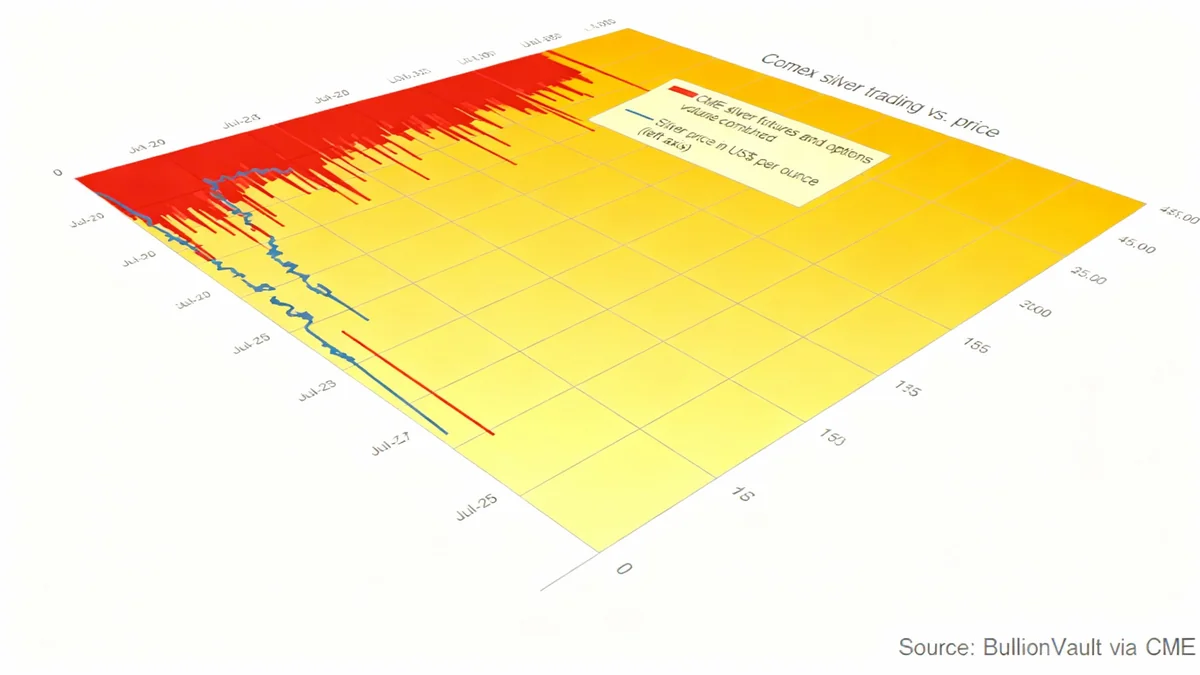
Gold and silver futures also fell sharply as investors locked in profits following recent rallies that pushed both metals to new all-time highs. The pullback was seen by some as a healthy, short-term correction rather than a change in the long-term trend.
Front-month gold futures dropped 2.4% to settle at $3,946.30 a troy ounce. Silver experienced an even steeper decline, falling 3.7% to $46.85 a troy ounce.
Peter Cardillo of Spartan Capital Securities suggested the decline is temporary. "We recommend considering purchases on further dips," he stated. "In my opinion, this decline is necessary and may last for a brief period."
Other Global Financial Developments
In other news impacting global finance, U.S. Treasury Secretary Scott Bessent confirmed that the United States has finalized plans for a $20 billion currency swap with Argentina. This arrangement is designed to provide Argentina with the U.S. dollars needed to support its national currency and stabilize its economy.
The combination of retreating stocks, falling commodity prices, and extremely bullish investor sentiment creates a complex picture for the markets. While corporate health appears solid, broader macroeconomic and geopolitical factors are now taking center stage, leading to increased caution among investors.