
Sridhar Vembu, the founder of software company Zoho, has publicly reinforced his long-standing belief in gold as a fundamental store of value. Citing detailed analysis from macro strategist Lyn Alden, Vembu argued that the precious metal serves as essential insurance against the debasement of fiat currencies, a position he has maintained for over two decades.
His comments arrive as gold experiences a significant price surge, recently surpassing $4,000 an ounce. The rally is linked to heightened economic uncertainty following new trade restrictions and tariffs, which have prompted investors to seek refuge in traditional safe-haven assets.
Key Takeaways
- Zoho founder Sridhar Vembu advocates for holding gold as a long-term hedge against currency devaluation, a view he has held for over 25 years.
- He cites research by macro strategist Lyn Alden, which indicates gold has historically preserved purchasing power better than many other major asset classes.
- Alden's analysis shows that government bonds and unlevered real estate have underperformed gold over extended periods when accounting for inflation.
- The research also highlights that the stock market's overall outperformance is driven by a very small percentage of exceptionally successful companies.
- Vembu explicitly stated his preference for gold over cryptocurrencies as a store of value.
Vembu's Enduring Philosophy on Gold
Sridhar Vembu has consistently viewed gold not as a tool for speculative trading but as a foundational asset for wealth preservation. In a recent public statement, he articulated this long-held perspective, emphasizing its role in a world of fluctuating currency values.
"I have long been in the 'gold as insurance against currency debasement' camp, for over 25 years now," Vembu stated. He explained his reasoning, noting the metal's historical performance against key economic benchmarks.
"Over the long term, gold has held its purchasing power in terms of commodities like petroleum, and gold has held its own against broad stock market indexes. No, I am not interested in crypto."
This position distinguishes Vembu from many in the technology sector who have embraced digital assets. His focus remains on tangible, historically proven assets that can weather economic storms and monetary policy shifts. By reaffirming his stance, he highlights a more conservative and traditional approach to managing wealth amidst global uncertainty.
Who is Sridhar Vembu?
Sridhar Vembu is an Indian billionaire business magnate and the founder and CEO of Zoho Corporation. Known for his unconventional business practices, such as focusing on R&D and employee training over marketing, he has built Zoho into a global software powerhouse without taking on external funding. His financial views often reflect his principles of self-reliance and long-term stability.
Economic Climate Fuels Safe-Haven Demand
Vembu's renewed endorsement of gold is particularly timely, occurring during a period of significant market volatility. The price of gold recently climbed above $4,000 per ounce, a notable milestone driven by a flight to safety among investors.
This market behavior was largely triggered by recent geopolitical events. According to market reports, the U.S. President's decision to impose 100% tariffs on Chinese goods and place new restrictions on software exports sent shockwaves through global markets. Equities tumbled as investors processed the implications of an escalating trade conflict.
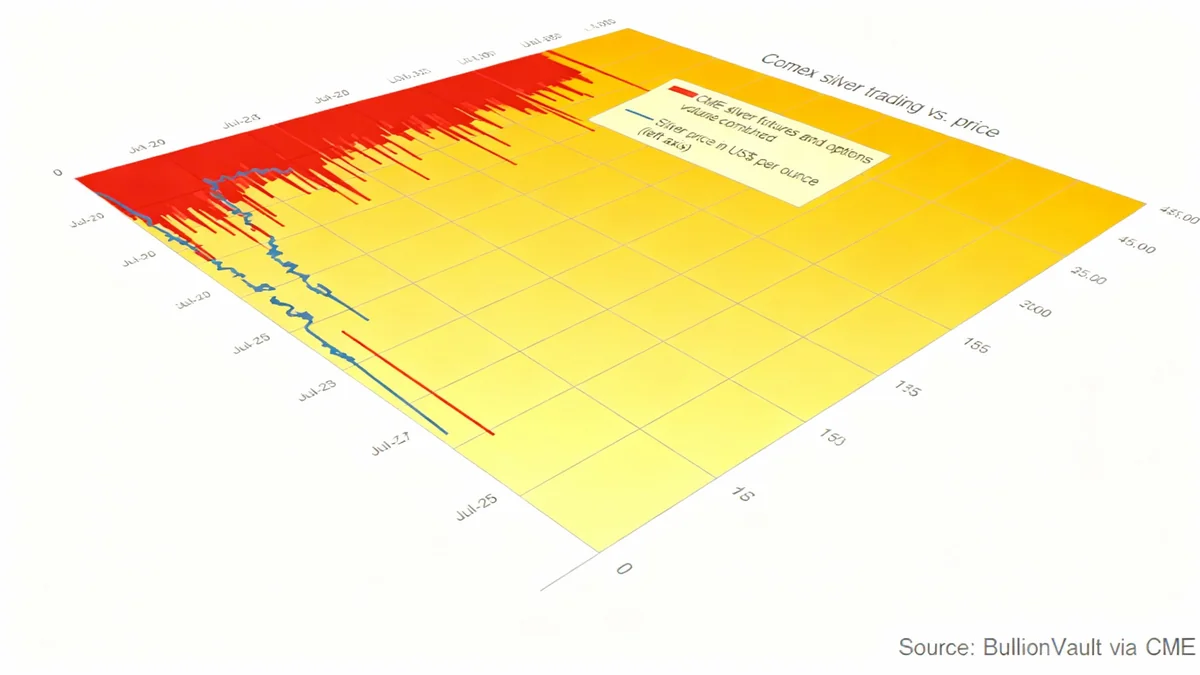
In response, capital flowed into assets traditionally seen as safe havens. Gold and silver saw increased demand as investors sought to protect their portfolios from the downturn in stock markets and potential currency fluctuations. This classic market reaction underscores the role that assets like gold play during times of economic and political instability.
Lyn Alden's Research on Asset Performance
To support his argument, Vembu referenced an in-depth study by macro strategist Lyn Alden. Her analysis examines the long-term performance of major asset classes, concluding that many popular investments fail to preserve purchasing power as effectively as gold.
Alden's research challenges conventional wisdom about the reliability of assets like government bonds, real estate, and the broader stock market. The findings suggest that when viewed over many decades and adjusted for inflation and currency debasement, gold's performance is uniquely resilient.
Government Bonds vs. Gold
One of the most striking findings in Alden's research concerns government bonds. Often considered the safest investment, U.S. Treasury bonds have historically failed to keep pace with gold in preserving wealth.
Even during the 20th century, a period marked by the U.S. dollar's rise to become the world's primary reserve currency, a portfolio of Treasury bonds would have lost significant purchasing power compared to simply holding gold. This suggests that the perceived safety of government debt does not always translate into long-term value preservation.
A Challenging Century for Bonds
According to Lyn Alden's historical analysis, despite the strength of the U.S. dollar, government bonds have not consistently matched gold's ability to maintain its value against inflation and currency devaluation over the long run.
The Reality of Stock Market Returns
While the stock market as a whole has delivered strong returns over time, Alden's analysis reveals a critical detail: this growth is not evenly distributed. The research points to a phenomenon where a tiny fraction of companies is responsible for the vast majority of market gains.
The key statistics are stark:
- Only 4% of all stocks account for nearly all of the market's returns above and beyond short-term government bills.
- The remaining 96% of stocks, in aggregate, barely provide a return better than holding the safest, shortest-term government debt.
This concentration of performance means that an investor who does not own those few exceptional companies is unlikely to achieve the market's average return. For Vembu, this reinforces the idea that while equities offer potential for high growth, they also carry a risk that is often understated by broad index performance.
Unlevered Real Estate Performance
Real estate is another asset class widely regarded as a stable, long-term investment. However, Alden's research indicates that its performance relative to gold is often misunderstood. When considered on an unlevered basis—meaning without a mortgage—and after accounting for necessary expenses, its returns are less impressive.
Factors that diminish real estate's long-term returns include:
- Property taxes: An ongoing expense that erodes gains.
- Maintenance and upkeep: Continuous costs required to maintain the property's value.
- Inflation: The general rise in prices, which affects both the property's value and the cost of its upkeep.
When these real-world costs are factored in, unlevered real estate has historically lagged gold as a pure store of value. As Alden's analysis concludes, "Literally all government bonds and most unlevered real estate have underperformed gold over the long run."
Gold as Financial Insurance
For Sridhar Vembu, these findings confirm a core investment principle: gold's primary function is not to generate spectacular returns but to act as financial insurance. It is a hedge against the inherent instability of fiat currency systems and the uncertainties of economic policy.
In an environment marked by rising tariffs, unpredictable policy decisions, and volatile markets, his message is that gold provides a stabilizing anchor for a portfolio. It is a defensive asset designed to protect wealth that has been created elsewhere, ensuring that its purchasing power endures across generations.
Vembu's perspective encourages a shift in thinking—from viewing gold as an active investment to be traded, to seeing it as a passive, permanent holding that secures a portion of one's wealth against systemic risks. This approach prioritizes long-term capital preservation over the pursuit of short-term gains, a strategy that gains appeal during periods of heightened economic stress.